

International Machining ESG Trends: Why Waste Fluid Reduction and Green Production Are Essential
ESG is reshaping the global machining industry at a deeper operational level. Beyond energy saving and carbon-related targets, manufacturers are now under growing pressure to reduce waste, improve resource efficiency, and make production practices more sustainable. In this shift, waste fluid reduction has become an important indicator of real progress. When coolant systems are poorly managed, fluid replacement becomes more frequent, wastewater volume increases, and production stability declines. That is why coolant purification is no longer just a maintenance concern. It is a practical step toward green production and a stronger international manufacturing image.
ESG Is Redefining What Green Manufacturing Means
Green manufacturing used to be discussed mainly in terms of energy consumption, equipment upgrades, or emissions. Today, expectations are broader. International markets increasingly pay attention to how production waste is controlled, how resources are reused, and whether sustainability is reflected in daily operations rather than only in external messaging.
For the machining industry, this means ESG is moving closer to the production floor. Fluid systems, waste generation, maintenance practices, and contamination control are all becoming part of the conversation. Manufacturers that can show visible improvement in these areas are better positioned to demonstrate that their sustainability efforts are practical, measurable, and aligned with global expectations.
Why Is Waste Fluid Reduction Becoming a Key ESG Topic
Waste fluid reduction is gaining more attention because it connects directly to both environmental impact and operational efficiency. In machining environments, coolant is essential to production, but once contaminated by tramp oil, sludge, metal fines, bacteria, or unstable concentration, it deteriorates faster and must be replaced more often. This creates a chain reaction of waste: higher coolant consumption, more wastewater to handle, more maintenance, and avoidable production inefficiency.
This is why the issue matters far beyond routine upkeep. Reducing waste fluid means reducing unnecessary disposal, lowering treatment pressure, and using production resources more responsibly. It is one of the clearest ways to turn ESG from a broad concept into an operational result.
Coolant Purification Turns ESG Into Action
Many manufacturers are looking for ESG improvements that are realistic, scalable, and visible in day-to-day operations. Coolant purification fits that need because it addresses a recurring source of waste without requiring a complete production overhaul.
When contamination is removed early, coolant remains usable for longer. When coolant life is extended, disposal frequency decreases. When disposal decreases, environmental burden and fluid-related cost both become easier to control. This makes coolant purification one of the most practical ways to support green production in the machining sector.
The ESG value can be understood clearly in the following areas:
| Coolant Management Issue | Production Impact | ESG-Related Value |
| Tramp oil contamination | Faster coolant deterioration | Reduced waste fluid generation |
| Sludge and fine particle buildup | Unstable fluid condition and dirtier systems | Better coolant reuse and cleaner production |
| Bacterial growth and odor | Poor fluid hygiene and shorter coolant life | Lower disposal frequency and improved working conditions |
| Inconsistent coolant concentration | Overuse of coolant and additives | More efficient resource control |
| Frequent fluid replacement | Greater wastewater and recovery burden | Lower environmental pressure |
From an ESG perspective, this contributes not only to the E in environmental performance, but also to more stable operations and more systematic process management. In other words, coolant purification supports sustainability in a way that is both practical and credible.
A More Practical Path to Green Production
In global machining operations, green production is increasingly defined by what can be improved consistently, not just what can be announced publicly. That is why fluid management is becoming more important. It offers a practical path to waste reduction by targeting problems at their source.
There are three priorities that make the biggest difference:
Separate Oil Contamination Early
Tramp oil is one of the main causes of coolant degradation. If it remains in the tank, oxidation, odor, and bacterial growth become more likely. Early separation helps preserve coolant condition and reduce unnecessary fluid replacement.
Remove Sludge and Fine Particles Effectively
Sludge, chips, and metal fines continue affecting fluid quality if they remain in circulation. Their buildup can reduce machining stability, worsen tank cleanliness, and shorten coolant service life. Efficient removal supports both cleaner production and more stable operation.
Keep Coolant Concentration Stable
Manual refill practices often create inconsistency. When concentration is too high, coolant and additives are wasted. When it is too low, lubrication and protection may become insufficient. A more controlled refill process helps improve resource efficiency and reduce avoidable consumption.
Taken together, these actions move manufacturers away from reactive disposal and toward preventive waste reduction, which is a much stronger ESG direction.
How We Support ESG-Oriented Coolant Management at HC Feng
At HC Feng, we see coolant purification as more than a maintenance solution. We see it as part of the broader transition toward cleaner, more efficient, and more responsible machining operations. Our solutions are developed around common production challenges such as coolant odor, rancidity, emulsification, shortened tool life, unstable fluid quality, and rising wastewater treatment pressure.
To help manufacturers reduce waste fluid and improve coolant system performance, we provide a range of filtration and purification solutions, including:
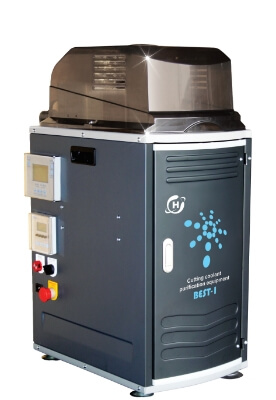
- Coolant Purification Equipment (Oil Skimmer) for oil separation, filtration, bacteria control, odor purification, and pH monitoring
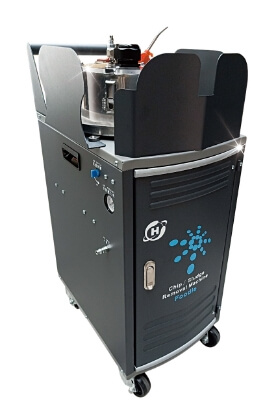
- Chips and Sludge Removal Machine for removing settled sludge and particles without interrupting machine operation
- Automatic Coolant Mixing Refill System (Smart Flow System) for stable concentration control and refill management
- Centrifugal Magnetic Filter for fine particulate filtration
- Mini Oil Skimmer for compact coolant purification requirements
By combining contamination control, filtration, and refill stability, we help create a more complete coolant management approach that supports lower waste, longer fluid life, and stronger green production performance.
What Does This Mean for International Brand Image
ESG is no longer only about internal improvement. It also affects how a manufacturer is perceived in global markets. Companies that can demonstrate cleaner operations, better waste control, and more responsible resource use often present a stronger and more credible manufacturing image.
For this reason, coolant management now carries brand value as well as technical value. A well-managed coolant system reflects process discipline, environmental awareness, and long-term operational maturity. It helps show that sustainability is not being treated as a separate message, but as part of the way production is actually managed.
For manufacturers serving international markets, that credibility matters. It strengthens green manufacturing communication and helps build trust around operational quality and environmental responsibility.
Moving Toward Lower Waste and Stronger Global Competitiveness
The ESG trend in the international machining industry is becoming more concrete, more operational, and more measurable. Waste fluid reduction is part of that change because it directly connects environmental performance with production reality. Instead of treating coolant replacement and waste disposal as unavoidable routine costs, manufacturers now have greater reason to improve fluid purification as part of a broader green production strategy.
At HC Feng, we believe sustainable manufacturing must also be practical manufacturing. By improving coolant purification, contamination control, and fluid management, it is possible to reduce waste, support greener operations, and reinforce a stronger international brand image at the same time. If you are looking for ways to reduce coolant waste and move toward more sustainable machining operations, feel free to contact HC Feng.
.jpg)